
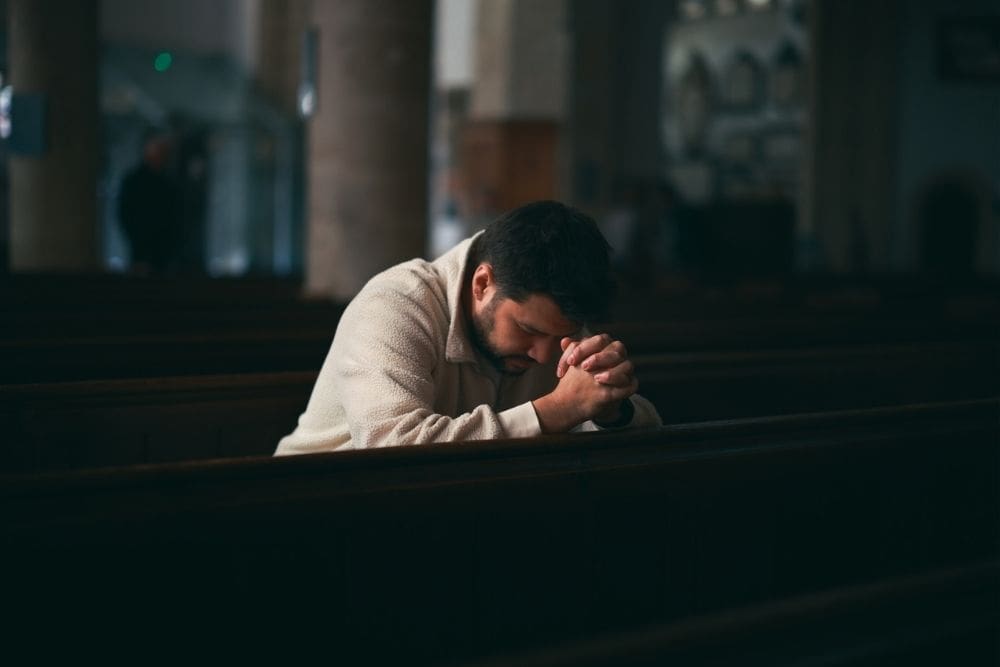
If the thought of following a religion makes your skin crawl, then a religious recovery center may sound like your own personal hell: Uncomfortable prayers, pressure to believe in God, and people telling you that faith is the only way to go substance-free. And if religion has hurt you before, or you simply don’t connect with it, those fears make sense. The good news is that recovery doesn’t require you to become religious.
At St. Gregory Recovery Center in Iowa, some clients embrace faith during treatment, while others prefer a more secular path. Both approaches can lead to lasting recovery.
Religion and spirituality appear often in recovery spaces for a reason; what matters most is finding a recovery experience that feels honest and sustainable for you. And if faith-based recovery doesn’t fit, you still have options.
Religion’s Historic Role in Recovery
Programs like Alcoholics Anonymous (AA) have shaped modern recovery culture, and thanks to lots of reporting showcased by huge news sources like the New York Times, many now know that the 12-Step model grew from early Christian movements. Those steps center on surrendering control to a higher power, reflecting on personal behavior, making amends, and seeking spiritual growth. That philosophy isn’t totally without success either.
According to research from Southern Illinois University, many people who go through residential recovery and outpatient treatment find long-term healing through the 12-step framework.
Here are some of the advantages:
-
- Community and belonging: Faith-based groups may help people feel less isolated and more supported.
- Structure and accountability: Meetings, routines, and reflection can bring stability during recovery.
- Meaning and hope: Some people feel that spirituality helps them reconnect with purpose and emotional healing.
Still, others may struggle with the religious components of faith-based treatment due to:
- Religious discomfort: People with religious trauma or different beliefs may feel alienated by spiritual language.
- A lack of focus on personal accountability: The push to rely on a higher power may feel like an anti-accountability philosophy to some clients.
- Aversion to religious practices: Others may feel uncomfortable with prayer or spiritual surrender and find that these practices can prevent them from fully engaging in treatment or taking it seriously.
The Scientific Case For Religion in Recovery
Some research on religion in recovery shows mixed but interesting results. Some studies suggest spirituality may help people stay engaged in treatment, build healthier relationships, and maintain long-term recovery.
Other positive findings highlighted:
- A documented connection between religion and lower rates of harmful behaviors, an outcome that could stem from a renewed sense of purpose and self-worth.
- Some participants in recovery studies described spirituality as helping them feel calmer, more hopeful, less judgmental, and more emotionally grounded.
- Faith groups can often create social connections and a stable routine of prayer and meditation while also helping people cope with stress, shame, or grief.
Other studies found little difference between faith-based and non-faith-based programs when researchers compared measurable outcomes, showing that:
- There was no major difference between the effectiveness of faith-based and secular rehabilitation programs, especially when both included strong support systems and evidence-based care.
- Spirituality is difficult to measure because people define it differently, so positive results may not be super accurate.
- Spirituality may not help everyone equally, especially if religious experiences caused pain in the past.
All of this is to say that religion may help some people, but it doesn’t have to work as a one-size-fits-all solution. In a secular context, community support, motivation, mentorship, and meaningful connection are the bigger drivers behind successful recovery.
Alternatives to Religious Recovery Services in Des Moines
Our S.M.A.R.T program uses practical, science-based tools rooted in Cognitive Behavioral Therapy (CBT) and Rational Emotive Behavior Therapy (REBT) rather than prayer or spiritual surrender to help secular clients build coping skills, manage urges, and create healthier routines, without a religious focus.
Here’s what SMART Recovery typically includes:
- Self-empowerment: The program encourages you to take an active role in recovery.
- Evidence-based tools: Meetings use practical coping techniques grounded in behavioral therapy.
- Flexible support: The program adapts to different goals and recovery experiences.
- Relapse prevention skills: Participants learn strategies for cravings, stress, and emotional triggers.
And, funnily enough, some religious people may even prefer the SMART program to a more faith-based approach, especially if they prefer to keep their inner spiritual lives separate from the skill-building process of recovery.
St. Gregory Does Recovery Your Way in Bayard, IA
Recovery works best when the approach feels personally meaningful rather than forced. At St. Gregory Recovery Center, you don’t have to adopt a new belief system to receive or deserve care. Some clients connect deeply with faith-based healing, while others prefer SMART Recovery or more secular treatment options. You can contact us and tell us which path is best for you.